Sorting
Source
Legimi
(7)
Form of Work
E-booki
(7)
Author
Paradox Max
(6)
Świetlińska Lena
(1)
Year
2020 - 2026
(7)
Country
Poland
(7)
Language
Polish
(7)
7 results Filter
E-book
In basket
Form of Work

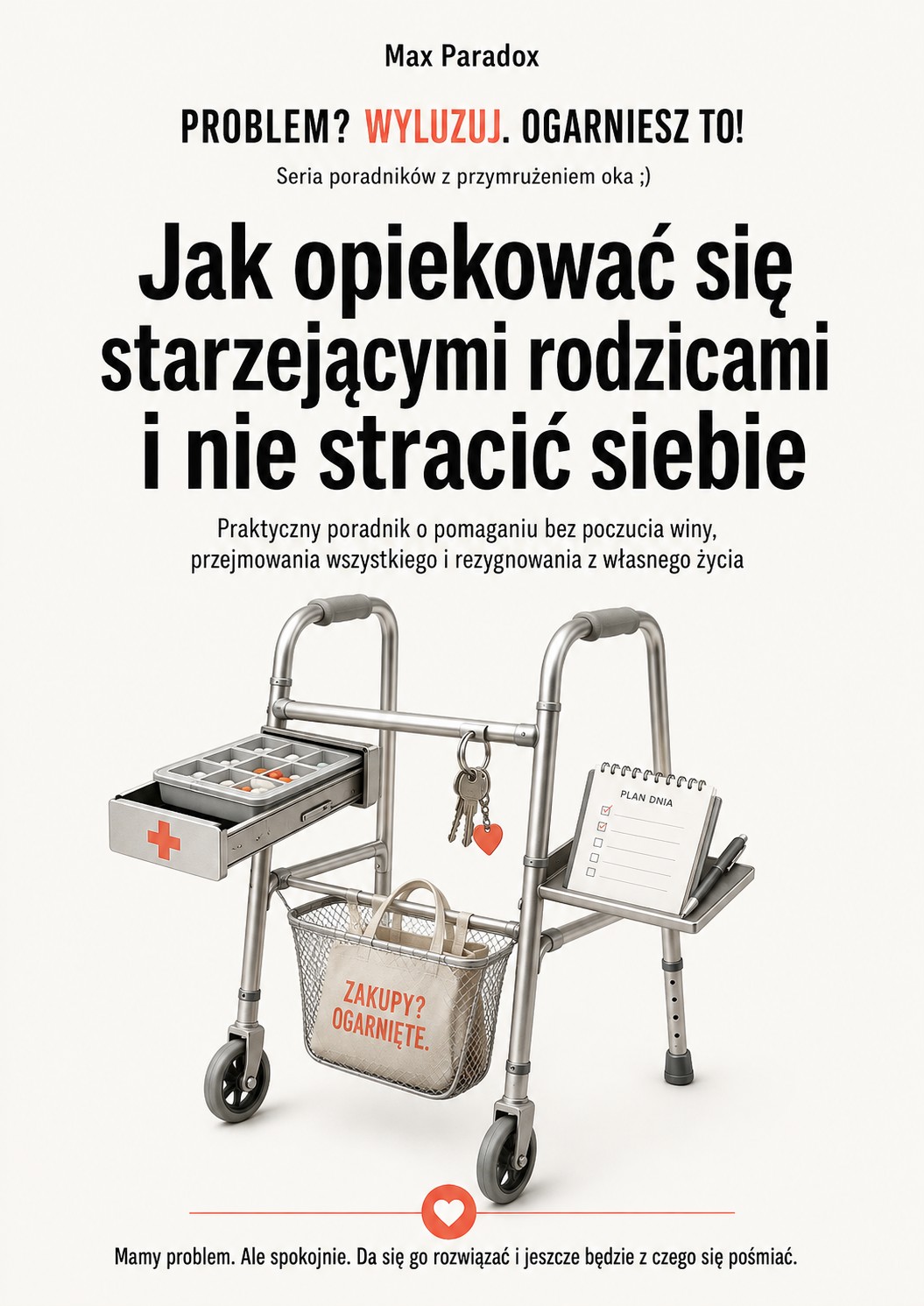
Rodzice potrzebują coraz więcej pomocy. Najpierw jednej wizyty u lekarza. Potem zakupów. Później trzeba sprawdzić rachunek, odebrać receptę, naprawić telefon, zawieźć do przychodni, porozmawiać o samochodzie i jeszcze odpowiedzieć na pytanie, dlaczego telewizor „znowu coś zrobił”.

Każda pojedyncza rzecz wydaje się niewielka.

Razem potrafią stworzyć drugi etat.

„Jak opiekować się starzejącymi rodzicami i nie stracić siebie” to praktyczny poradnik dla dorosłych dzieci, które chcą wspierać swoich rodziców, ale nie chcą przy okazji całkowicie zniknąć z własnego życia.

Bez moralizowania.

Bez przekonywania, że dobre dziecko powinno być dostępne dwadzieścia cztery godziny na dobę.

I bez magicznej rady: „po prostu postaw granice”.

Bo jeśli twoja mama dzwoni z informacją, że pilnie trzeba kupić baterie do pilota, a ojciec uważa, że absolutnie nie potrzebuje pomocy, stojąc jednocześnie na taborecie, sytuacja może wymagać czegoś bardziej konkretnego.

W książce dowiesz się między innymi:

• jak rozpoznać, kiedy zwykła pomoc zaczyna zamieniać się w stałą opiekę;

• jak wspierać rodziców bez niepotrzebnego odbierania im samodzielności;

• jak radzić sobie z poczuciem winy, gdy nie możesz albo nie chcesz być dostępny zawsze;

• jak rozmawiać o zdrowiu, bezpieczeństwie, prowadzeniu samochodu, finansach i dodatkowej pomocy;

• jak podzielić obowiązki między rodzeństwo;

• jak zbudować prosty system wizyt, dokumentów, zakupów i spraw codziennych;

• kiedy korzystać z profesjonalnego wsparcia;

• jak przygotować plan awaryjny;

• jak reagować, gdy rodzic odmawia pomocy;

• jak zauważyć własne przeciążenie, zanim każda rozmowa telefoniczna zacznie działać na ciebie jak alarm przeciwlotniczy;

• jak zachować własną pracę, relacje, odpoczynek i życie.

To książka o granicy między troską a kontrolą. Między pomocą a przejmowaniem. Między odpowiedzialnością a przekonaniem, że musisz być jedynym człowiekiem rozwiązującym wszystkie problemy.

Max Paradox pokazuje konkretne procedury, przykłady rozmów, rozwiązania minimum i plany B. Jednocześnie przypomina o czymś, co w opiece bardzo łatwo zgubić: starszy rodzic nadal jest dorosłym człowiekiem, a opiekun nadal ma własne życie.

Będzie praktycznie.

Będzie momentami poważnie, bo starzenie, zdrowie i utrata samodzielności na to zasługują.

Ale będzie też sporo humoru.

Bo rodzinny system opieki bez humoru bardzo szybko zamienia się w połączenie przychodni, urzędu i infolinii technicznej.

A człowiek ma jednak ograniczoną cierpliwość.

Zwłaszcza do dekodera.

Ta książka nie obiecuje, że opieka stanie się łatwa.

Pomoże jednak sprawić, żeby była bardziej uporządkowana, uczciwa i możliwa do udźwignięcia.

Dla rodziców.

I dla ciebie.

Publikacja została przygotowana z wykorzystaniem narzędzi wspomagających proces twórczy, w tym rozwiązań opartych o sztuczną inteligencję. Ostateczna koncepcja, struktura i redakcja należą do autora.

This item is available online. Expand information to see details.
Dostęp do treści elektronicznej wymaga posiadania kodu dostępu, który można odebrać w bibliotece.
E-book
In basket
Form of Work

There is a version of you that nobody has ever fully seen.

Not because you are secretive. Not because your life is without warmth or the genuine love of people who have known you for years. But because the version of you that shows up in relationships - capable, self-aware, emotionally articulate in the curated way that passes for openness - is not quite the whole thing. There is a version underneath. The unedited one. The one that exists before the story is organized, before the feeling is processed into something presentable, before the management gets there first and makes you safe to be around.

This book is about that version. And about why you have been protecting it - from the people who love you, from the world, and most completely of all, from yourself.

Seen Through takes one psychological pattern that quietly runs people's lives and goes all the way in. The pattern is the fear of being truly known - the specific, almost universally unacknowledged terror that lives at the center of your most intimate relationships. Not the fear of rejection, though that gets all the airtime. The deeper fear: that if someone saw you fully - unmanaged, unedited, present in the actual texture of who you are - they would discover something insufficient. Something that would not quite hold up under the scrutiny of being truly known.

You have been protecting yourself from this discovery for a long time. With considerable skill.

This book is a map of how you do it. The performance of openness that stops just short of actual openness. The stories told in the past tense that sound like vulnerability but function as its precise opposite - already resolved, already organized, already safe. The relationships chosen and arranged, without conscious design, to ensure that intimacy flows around you without quite landing on you.

You will find the paradoxes. The intimacy you allow is the intimacy that prevents the intimacy you want. The self-sufficiency you project makes full love impossible to receive. The stories you tell to create connection substitute for the one thing connection actually requires: presence. Right now. Unmanaged. In real contact with another person.

You will find the fear beneath the fear - the rarely-examined terror that the self revealed in genuine exposure will turn out to be, at the core, not quite enough. This fear was not formed through rational assessment. It was formed early, in the cumulative experience of learning which version of yourself was welcome. The conclusion it reached about you was not accurate then. It has been running your relational life ever since.

Seen Through will not make the fear disappear. But it will make it visible in a way that changes your relationship to it. Not as the condition you must overcome before you are ready to be present. As the thing that has been running the show - below awareness, in ways you can now see clearly enough to have a different kind of choice about.

This book was written for the person who is loved and quietly, persistently lonely at the same time. For the person who knows exactly what they are doing and does it anyway. For the person who is tired of living behind the glass.

The door opens from the inside. It always has.

This publication was prepared using tools that support the creative process, including artificial intelligence solutions. The final concept, structure and editing are the responsibility of the author.

This item is available online. Expand information to see details.
Dostęp do treści elektronicznej wymaga posiadania kodu dostępu, który można odebrać w bibliotece.
E-book
In basket
Form of Work

You know the feeling. Not a dramatic feeling - nothing that announces itself or gives you a word to use when someone asks what's wrong. It is quieter than that. It is the moment at a dinner table when everyone around you is laughing and you are watching from somewhere slightly behind your own eyes, thinking: I know I should be feeling something right now. It is the relationship that functions but does not quite connect. The life that looks like what you wanted - and that you experience from a slight, persistent distance, as though the glass between you and your own life is not thick enough to be visible but present enough that nothing fully arrives.

It is not depression, exactly. Not grief. It is the specific condition of someone who learned, at some point in their history, that feelings were too costly to be had in full. Someone who developed the ability to turn the dial down. To manage the interior life rather than inhabit it. To be present to everything and fully arrived at nothing.

You survived. That part worked. What nobody told you is that the dial doesn't discriminate. You cannot mute the pain and keep the joy. The system that learned to suppress the difficult things suppressed everything with equal efficiency. And you have been living, for months or years or decades, in a life that is functional and fine and quietly, persistently, not quite real.

This is what The Anesthesia Years is about.

Not a dramatic condition. Not a life that has visibly fallen apart. The quiet pattern that organizes the lives of people who are, by every external measure, managing. People who function impeccably. People who show up for everyone else and nowhere for themselves. People who almost-felt something last Tuesday and managed it back into storage before it could arrive.

The dial is not broken. It was set, by a younger version of you, to a position that was correct for the conditions that version was surviving. The conditions have changed. The setting has not caught up.

This book is not a cure. It offers something more durable: the specific, honest understanding of a pattern that has been shaping your experience, possibly for most of your life, without your full awareness. Because you cannot change what you cannot see.

The thing behind the gate is not more difficult than what produced the gate.

It is only the life you have been living at reduced volume.

The full version is still there.

This publication was prepared using tools that support the creative process, including artificial intelligence solutions. The final concept, structure and editing are the responsibility of the author.

This item is available online. Expand information to see details.
Dostęp do treści elektronicznej wymaga posiadania kodu dostępu, który można odebrać w bibliotece.
E-book
In basket
Form of Work

You know the feeling. Something good arrives - a relationship that finally has real weight, a career opening you've been quietly hoping for, a version of your life that looks like the thing you meant to build. And then you do the thing. The text sent at exactly the wrong moment. The argument started from nothing. The person pushed away with both hands when what you actually wanted was for them to stay.

You have done this before. That is what makes it hard to look at. Not the single incident. The pattern. The way it keeps happening. The way the details shift but the shape stays the same.

The Burning Hand is not a self-help book in the conventional sense. It does not promise transformation. It does not offer ten steps that, followed correctly, will produce the person you were meant to be. What it offers is something rarer: honesty. The specific, unflinching honesty of someone who has looked at this pattern from the inside and is reporting back without judgment and without clinical distance.

What you will find in these pages is yourself. Not a flattering version. The full, complicated, contradictory version - the one who wrecks good things and has very good reasons for doing it. Reasons formed long before you had the language to name them.

You will meet the saboteur - the part of you that sounds like wisdom and operates like a wrecking ball. You will see the relationships you chose to prove yourself right. You will recognize the loyalty to pain. You will sit with the version of yourself nobody gets to meet.

The pattern is not you. It is something you learned, in a context that required it, at a time when it made sense. It became you, yes. But it is not the whole of you.

The burning hand can open. One finger at a time.

This publication was prepared using tools that support the creative process, including artificial intelligence solutions. The final concept, structure and editing are the responsibility of the author.

This item is available online. Expand information to see details.
Dostęp do treści elektronicznej wymaga posiadania kodu dostępu, który można odebrać w bibliotece.
E-book
In basket
Form of Work

You know the feeling. The chest tightening when plans change at the last minute. The irritation - sharp and disproportionate - when someone does something differently than you would have done it. The mind that won't go quiet at two in the morning, running contingencies for contingencies, rehearsing conversations that haven't happened yet.

You call yourself thorough. Responsible. Someone who takes things seriously. And you are those things. But there is something else happening underneath - something that doesn't get named because naming it would require admitting that the planning, the preparation, the relentless forward motion of managing everything and everyone - none of it has ever quite given you what it promised. Not the peace. Not the safety. Not the sense of finally, solidly being okay.

This book is about that something else.

It is about the need for control - not the ordinary kind that helps you get things done, but the deeper, more desperate kind that has quietly organized your entire life around keeping uncertainty at bay. The kind that exhausts you in ways that sleep doesn't fix. The kind that has shaped your relationships without your full knowledge. The kind that has protected you, genuinely and at real cost, for longer than you can remember.

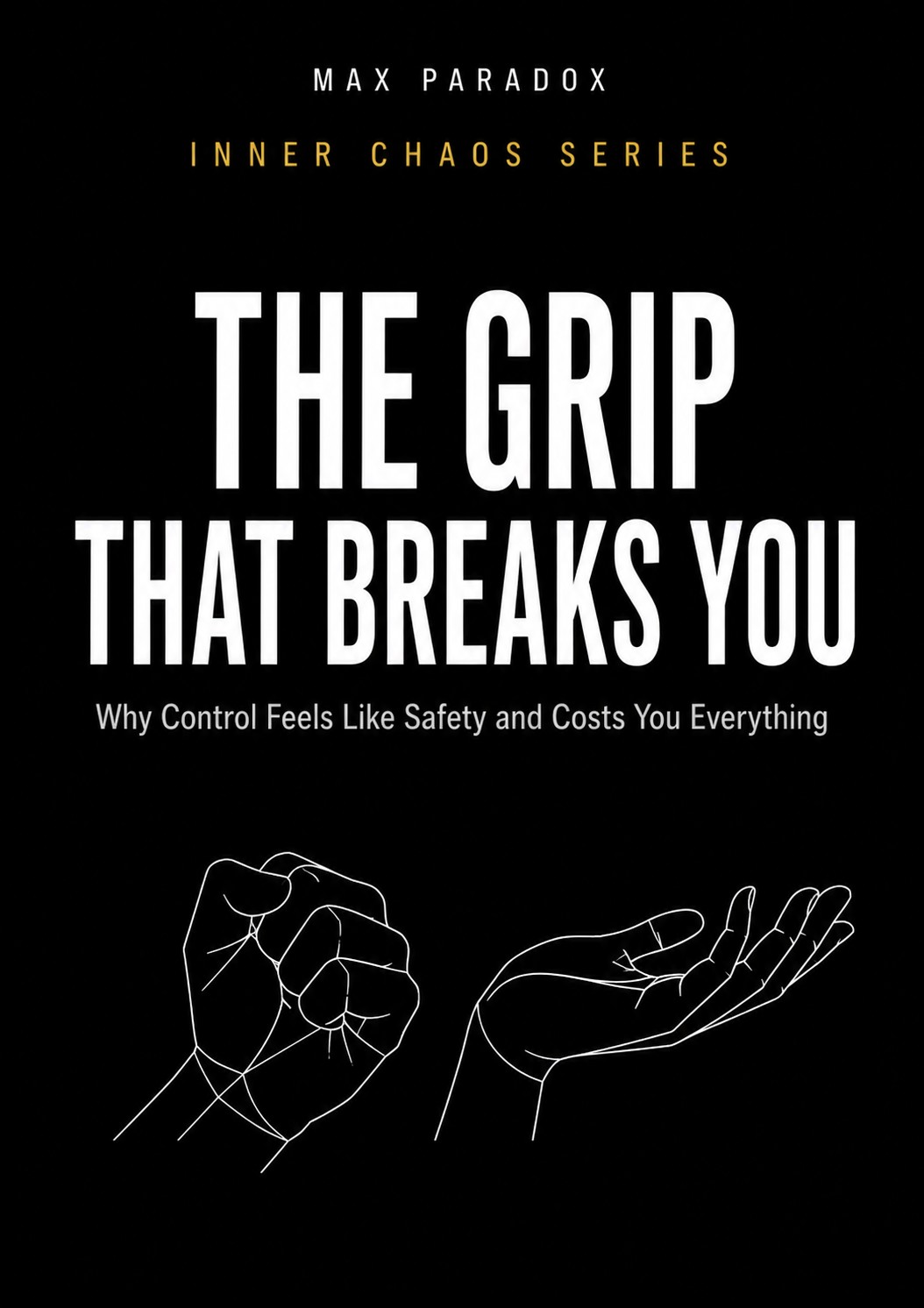
Across twenty-five chapters, The Grip That Breaks You traces the pattern in every domain of a life - in the body that has been holding what the mind refused to process, in the relationships managed to the edge of genuine intimacy and no further, in the perfectionism and the anger and the self-improvement project that became its own form of self-control.

It asks, in every chapter and from every angle, the question that most books don't reach: what are you actually protecting?

The answer is not weakness. It is something ordinary and precious - the belief that you are worthy of love even when you are not performing. That belief was damaged, at some point, by experiences that taught your nervous system that uncertainty means danger. The control pattern was your answer. A brilliant, functional, ultimately insufficient answer.

It worked well enough to keep you going.

It never worked well enough to give you rest.

The loosening is possible. Not as transformation - as practice. Slow, imperfect, genuinely yours.

The open hand is waiting.

So is everything it can hold.

This publication was prepared using tools that support the creative process, including artificial intelligence solutions. The final concept, structure and editing are the responsibility of the author.

This item is available online. Expand information to see details.
Dostęp do treści elektronicznej wymaga posiadania kodu dostępu, który można odebrać w bibliotece.
E-book
In basket
Form of Work

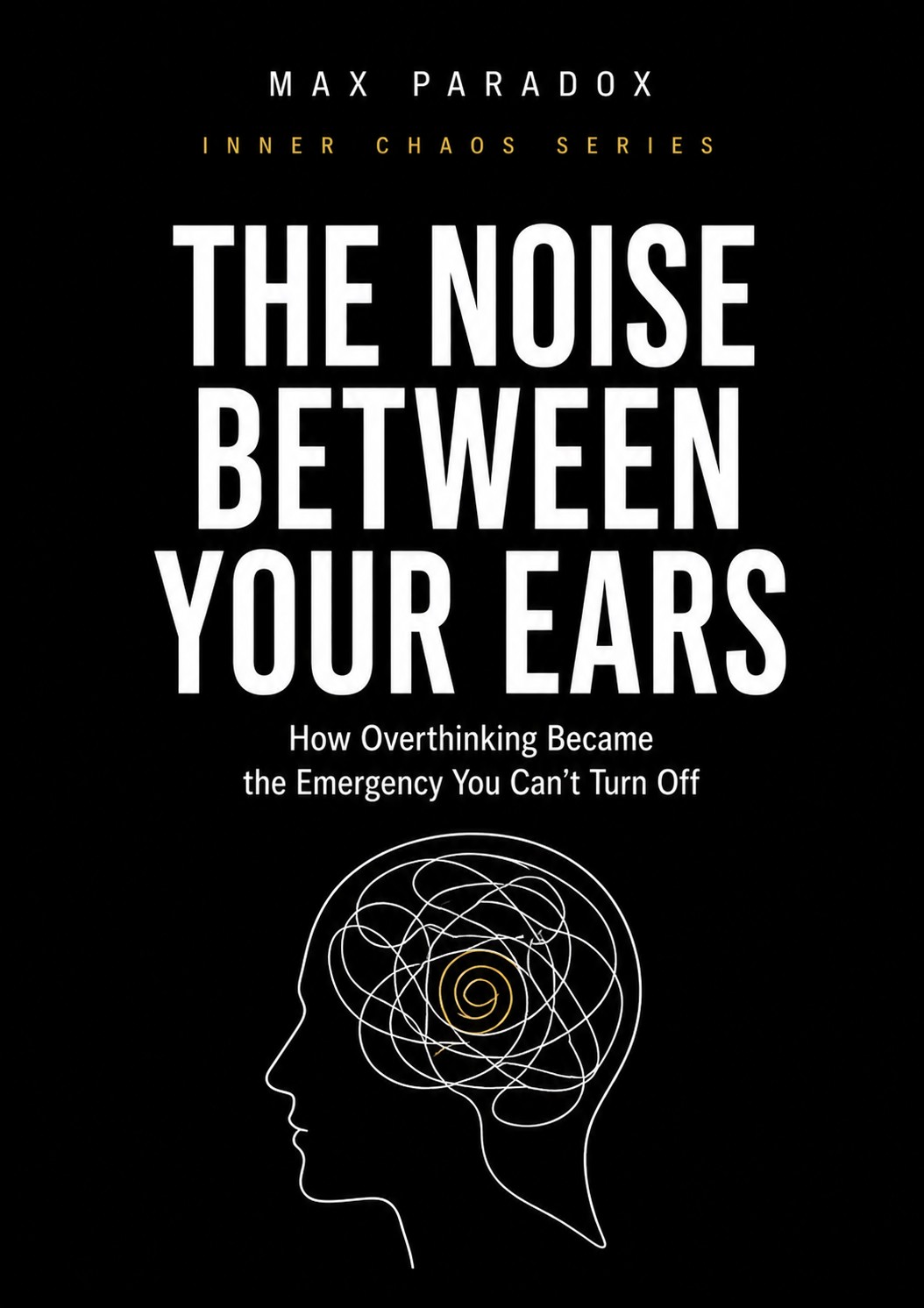
There is something happening in your mind right now. Not a thought exactly - something beneath thought. A hum. A readiness. A low, continuous scanning of the environment for the thing that might require managing. You have lived with this hum for so long that you have stopped hearing it as hum. It has become the baseline. It has become the sound of you.

This book is about that sound.

The Noise Between Your Ears is about the mind that will not stop - not because it is broken, but because it was trained, over years and in response to real things, to treat the world as a place that requires constant management. The loops that run in the background of your life. The catastrophes that live rent-free in your imagination. The silences you cannot leave unread. The decisions that stay permanently open. The past that keeps arriving in the present tense. The sleep that will not come because the thinking has not finished.

You are not reading this because you are broken. You are reading this because you are exhausted. Because you have been running something very demanding for a very long time, and the running has cost you things you are only beginning to add up. Sleep. Presence. The simple, inaccessible pleasure of being in a good moment without immediately beginning to worry about when it will end.

The overthinking mind is not running on bad data. It is running on a deeply embedded operating system - installed early, maintained through years of vigilance - and operating systems do not yield to being explained to. They yield, gradually and imperfectly, to something more patient, more embodied, and more honest than explanation.

This book attempts to provide that. Not a list of techniques. Not a twelve-step program. What is available is something more interesting: a real relationship with the mind you have. More observation and less identification. More presence and less management. More of the life that is actually occurring.

You will find yourself in these pages, more than once, in ways that may be uncomfortable. You will find the catastrophizing mind, the guilt loop that never closes, the reassurance that never reassures, the story you have been telling about yourself that started as an explanation and became a cage. You will find the body - because the mind that will not stop is not separate from the shoulders that will not drop and the 3 a.m. wakefulness that is your nervous system's honest report on the state of affairs.

And you will find the possibility of a different relationship with your own mind. Not the elimination of the noise. The discovery that you are not the noise.

You are not your anxiety. You are a person who has anxiety - which is different, in the same way that having a difficult weather pattern is different from being the weather.

This book cannot change the weather. But it can help you learn to live in it differently.==============

This publication was prepared using tools that support the creative process, including artificial intelligence solutions. The final concept, structure and editing are the responsibility of the author.

This item is available online. Expand information to see details.
Dostęp do treści elektronicznej wymaga posiadania kodu dostępu, który można odebrać w bibliotece.
E-book
In basket

Feluś, Tolek i Lila ruszają nocą zobaczyć wyjątkowy kwiat. Gdy świetlik zauważa pękniętą gałąź nad ścieżką, nie ma pewności, czy naprawdę spadnie. Mimo obawy, że niepotrzebnie przerwie wyprawę, mówi wyraźne 'stop' i ostrzega przyjaciół. Ciepła, wierszowana historia pokazuje, że odwaga to także zgłoszenie możliwego zagrożenia, zachowanie bezpiecznej odległości i zwrócenie się do dorosłego. Książeczka dla dzieci w wieku 3-5 lat oraz opiekunów czytających na głos, pomocna w rozmowie o bezpieczeństwie, zaufaniu do własnych obserwacji i mądrym reagowaniu. Opowieść pomaga dziecku zapamiętać prostą zasadę: zatrzymaj się, odejdź na bezpieczną odległość i powiedz dorosłemu.

This item is available online. Expand information to see details.
Dostęp do treści elektronicznej wymaga posiadania kodu dostępu, który można odebrać w bibliotece.
The item has been added to the basket. If you don't know what the basket is for, click here for details.
Do not show it again